Celebrating 5 Years of Conceptual Surgery

Celebrating 5 Years of Conceptual Surgery: Five Years of Learning, Mentorship, and Surgical Excellence 

Estimated reading time: 3 minutes

Five years ago, Conceptual Surgery started because surgery residents needed something different. Not just video lectures. Something practical, structured, actually useful for the work they do every day. 

Since then, thousands of residents have used it. To get better at surgery. To prepare for exams. To understand what they’re doing, not just memorize facts. 

Today we’re marking five years. But honestly, it’s more about thanking everyone who’s trusted this platform. Your feedback. Your support. That’s what made it work. 

To say thanks, we’re running a special offer. 

5th Anniversary Special 

Flat ₹11,000 OFF 

1 Month FREE 

Available on Single Plan and Buddy Plan 

Use Code: CONCEPTUAL 

Works across all eConceptual specialty platforms 

Limited time only 

This is a good time if you’ve been thinking about it. Whether you’re starting residency or preparing for university exams. 

Why Residents Actually Use Conceptual Surgery?

  • The Lectures Actually Make Sense 

Faculty who’ve spent decades teaching surgery. Who examine MS and DNB residents. They know what matters and what doesn’t. Each lecture connects theory to what you actually see in the OR and wards. Not just abstract concepts. 

  • Real Patient Cases 

Surgery isn’t learned from books. You learn by seeing things. 

That’s why we focus on: 

  • Clinical examination demonstrations 
  • Real patient case presentations 
  • Important clinical signs you need to recognize 
  • Practical bedside approaches 
  • Cases from university exams 

Residents get confident faster during ward postings. Viva exams feel less scary too. 

Actual Mentorship 

Learning is different when someone’s actually helping you. 

You get: 

  • Live interactive sessions where you can ask questions 
  • Classes specifically to clear doubts 
  • Guidance on your thesis 
  • Mentorship throughout residency 

The point is you’re not just studying alone. Someone’s actually invested in you getting better. 

Two Ways to Access It 

Solo Plan 

You. Full access. All features. For people who want to study at their own pace without worrying about sharing. 

Buddy Plan 

Two people from the same specialty. Same cost split. Individual accounts for each person. Works for friends, batchmates, people studying together. 

Five Years and Counting 

Every resident who watched a lecture after a long shift. Every doubt that got cleared. Every person who actually passed their exam. That’s what these five years mean. 

We haven’t changed what we’re doing. High-quality surgical education. Real mentorship. Clinical learning that matters beyond just passing exams. 

And we’re not done. More surgeons coming through. More learning happening. More residents getting better at what they do. 

Take Advantage of the Anniversary Offer 

Flat ₹11,000 OFF (GRAB THIS OFFER NOW) 

1 Month FREE on Single & Buddy Plans 

Use Code: CONCEPTUAL 

Limited time 

Five years is worth celebrating. And we want you to be part of what comes next. 

Thanks for being part of this. Here’s to many more years of residents getting better at surgery.

Share

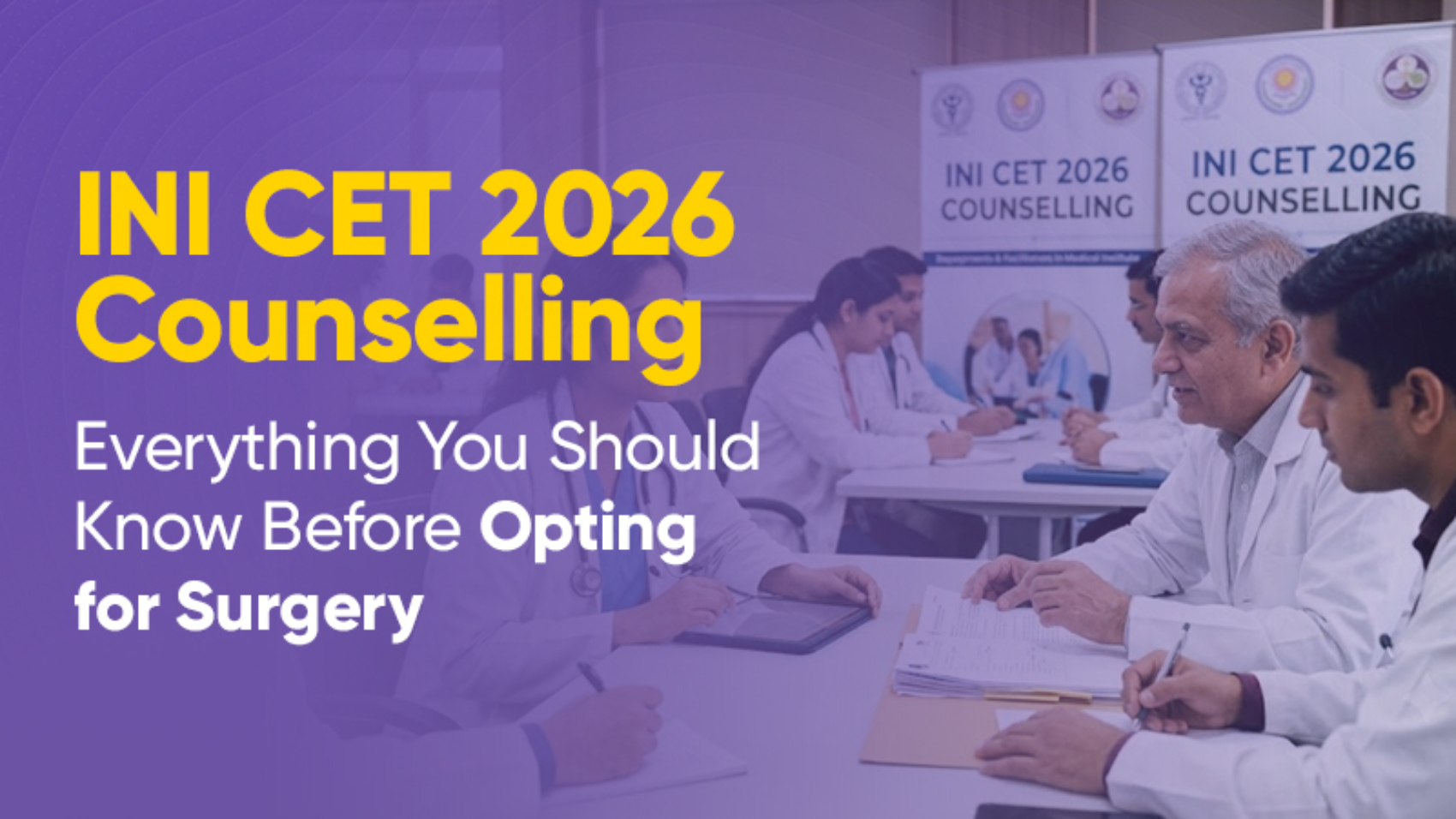
INI CET 2026 Counselling

INI CET 2026 Counselling: Everything You Should Know Before Opting for Surgery 

INI CET 2026 Counselling: Everything You Should Know Before Opting for Surgery ​

Estimated reading time: 4 minutes

Most INI CET aspirants think surgery is the obvious pick when counselling happens. Good reputation. Opens doors. Respected specialty. Makes sense, right? 

Except choosing something just because everyone else does isn’t smart. 

After INI CET 2026 results, it’s not just about grabbing any seat. You’re picking what you’ll do for years. Before you lock in your choices during INI CET 2026 counselling, actually think about what surgery involves. 

Why Surgery Continues to Be a Popular Choice?

General Surgery gives you one of the broadest experiences you can get during postgraduate training. 

You’re dealing with emergencies, helping with tough cases, doing surgeries yourself with someone watching, building skills that stick with you forever. 

People pick surgery for reasons like: 

  • Wide clinical exposure 
  • Strong surgical skill development 
  • Multiple super-specialization options 
  • High demand across hospitals 
  • Opportunities in both academics and private practice 

If you like getting your hands dirty and doing actual procedures, surgery can be great. 
Best PG Medical Branches After INI-CET: A Practical Guide to Choosing Your Medical Career | Believers Consultancy Blog

What Life During Surgery Residency Looks Like?

Surgery residency is rough. 

Long shifts. Emergency calls at weird hours. Ward work that never ends. Tons of time in the OR. Throw in seminars, case discussions, research, exams on top of that. 

A typical residency means: 

  • Emergency and trauma duties 
  • Daily ward rounds 
  • Operation theatre postings 
  • Outpatient department responsibilities 
  • Academic discussions and journal clubs 
  • Night shifts and on-call duties 

It’s demanding. You need to manage your time or you’ll burn out. 

Questions to Ask Yourself Before Choosing Surgery 

Most people picking branches during INI CET 2026 counselling focus on college rankings or previous cutoffs. 

That’s not the real question. The real one is whether surgery fits you. 

Think about this: 

  • Do you actually enjoy procedural work? 
  • Can you handle long hours in the OR? 
  • Are you okay with emergency situations? 
  • Do you work well in a surgical team? 
  • Are you willing to keep learning your whole career? 

Answer those honestly. It makes picking easier. 

Career Opportunities After General Surgery 

Surgery gives you options when residency ends. 

You can go to: 

  • Join government hospitals 
  • Work in private hospitals 
  • Start your own surgical practice 
  • Teach and do academics 
  • Continue with super-specialization through MCh or DNB Super Specialty 

Lots of surgeons later focus on things like gastrointestinal surgery, urology, pediatric surgery, vascular surgery, surgical oncology, plastic surgery. 

Surgery is flexible. That’s why it works as a long-term choice. 

Don’t Choose a Branch Only Because of the Rank 

During INI CET 2026 counselling, a lot of people pick surgery just because their rank allows it. 

Your rank gets you in the door. But actually liking your job? That’s different. 

Picking surgery because your friends are doing it, because it sounds impressive, or because last year’s cutoffs looked good? That’s not a strategy. That’s drifting. 

What you actually care about matters. How you like to work matters. Your lifestyle preferences matter. Your goals matter. 

Factors to Consider During INI CET 2026 Counselling 

Before you lock in your surgery preferences, forget about just the college name or last year’s cutoffs. 

Actually look at: 

  • Clinical Exposure – Does the hospital see enough patients? Do you get to see different types of cases or just the same stuff repeatedly? 
  • Faculty and Mentorship – Your mentors matter more than anything else. Bad mentors ruin residency. Good ones make it. 
  • Case Volume – More surgeries means more hands-on time. Simple as that. 
  • Research Opportunities – If you want to teach or do super-specialization later, you need programs that support research. 
  • Hospital Infrastructure – Modern OTs and decent equipment actually make a difference in learning. 
  • Future Career Goals – Figure out what you want after residency before picking a college. Don’t reverse it. 

Think about these when you’re deciding during INI CET 2026 counselling. 

Common Counselling Mistakes to Avoid 

Aspirants lose opportunities because of dumb counselling mistakes all the time. 

Things like: 

  • Filling too few preferences 
  • Ignoring reporting deadlines 
  • Not understanding seat upgradation rules 
  • Choosing a branch without doing proper research 
  • Relying entirely on previous year’s closing ranks 

Plan ahead. Understand how it works. Avoid these. 

Final Thoughts 

INI CET 2026 counselling isn’t just about seat allocation. It’s the start of your postgraduate career and one of the biggest decisions you’ll make. 

General Surgery is good. But it’s demanding. It requires commitment, grit, and actual interest in surgical practice. 

Before you lock in your choices, understand what you’re getting into. Think about where you want to go. Make a decision based on what matters to you, not what’s trendy or what people expect. 

The best branch isn’t the most popular one. It’s the one that fits who you want to become a doctor. 

Share

Surgery Residency

Silent Struggle Of Surgery Residents During Residency

Estimated reading time: 5 minutes

From the outside, the journey of becoming a surgeon looks very sorted and powerful. But the reality is not like that; behind the polished scrubs, sharp instruments, and steady hands lies a story of grit, exhaustion, and emotional endurance. The life of surgery residents is often misunderstood, underappreciated, and most of all, silently intense, which can be difficult.

This blog helps to shed light on the unseen battles fought by surgery residents while exploring their mental, physical, and emotional challenges during surgical residency. While the operating table might be their battlefield, their real war is fought long before they become independent surgeons.

The Unrelenting Hours and Physical Exhaustion

You know, a day of a surgery residency often begins before sunrise and stretches into the late hours of the night. There are almost twelve to eighteen-hour shifts that are not rare, and sleep becomes a luxury rather than a necessity.

  • While standing for long hours during surgeries and usually cause fatigue, back pain, and even fainting spells in the early years.
  • Residents sometimes skip their meals, work through breaks, and push through without hydration.
  • Despite their physical exhaustion, they are trying to remain sharp, focused, and fully responsible, especially in the operating room.
Academic Pressure and Constant Learning

Unlike what many people think, surgical residency is not just about learning to operate. It involves a steep academic curve where surgery residents must balance theory, clinical judgment, and hands-on skills all at once.

  • Surgical residency is more than mastering the scalpel; it’s a rigorous blend of academics, clinical decision-making, and daily case discussions that shape a well-rounded surgeon.
  • From journal clubs to licensing exams, the journey demands constant growth. If you’re starting, you must read this blog on why new junior residents should join Conceptual Surgery, your guide to expert mentorship and smart training: Conceptual surgery
Emotional Burden and Mental Fatigue

While surgery often involves saving lives, it also means witnessing death, complications, and patient suffering up close. The emotional burden of seeing a patient deteriorate — or losing one on the table is a weight many surgery residents carry silently.

  • There is often no time or space to process grief, guilt, or fear.
  • Mistakes, even minor ones, are not easily forgiven, either by seniors or by the residents themselves.
  • The fear of failure, the pressure to impress mentors, and the overwhelming sense of responsibility can result in anxiety and depression.
The Hierarchical Culture

Surgical residency is deeply hierarchical. Seniority often dictates respect, and juniors are expected to “earn their place” over time. While this system aims to maintain discipline, it can sometimes breed hostility, humiliation, and toxic work environments.

  • Harsh scolding in front of patients, sarcastic feedback, and non-stop scrutiny can erode confidence.
  • Juniors often do menial tasks while seniors handle surgical decision-making, limiting exposure during early years.
  • Many residents’ surgery reports feel unseen, unheard, and undervalued, especially in high-pressure departments.

While mentorship can be transformative, not every resident is lucky enough to have supportive seniors. In its absence, learning becomes a lonely journey.

Uncertainty of the Future

The competitive nature of medicine doesn’t end with admission into surgical residency. Securing a super specialty or a good position requires consistent academic performance, research publications, networking, and strong recommendations.

  • The pressure to get into the best general surgery residency programs or subspecialties like surgical oncology, hepatobiliary, or pediatric surgery adds to the already heavy workload.
  • Many residents also struggle financially, especially in private institutions or when preparing for international exams.
  • Post-residency, the uncertainty of job placements, fellowships, or private practice can create long-term stress.

In a world where your next step depends on how you perform every single day, the future feels less like a dream and more like a test you never stop taking.

Struggling with Work-Life Balance

In the chaotic schedule of surgery residents, life outside the hospital becomes blurry.

  • Many miss family events, birthdays, and personal milestones.
  • Relationships suffer due to long hours and emotional unavailability.
  • Self-care takes a backseat, there’s no time for hobbies, exercise, or even proper meals.

The idea of balance often feels like a myth during residency. Residents frequently say, “We live in the hospital,” and for most of their training, that is painfully true.

What Keeps Them Going?

Amid all the challenges, there is something deeply powerful about being a surgery resident. Despite the silence, the stress, and the sacrifices, some moments make the struggle worth it:

  • The first time they assisted in a critical surgery.
  • When a patient smiles and says “thank you” after recovery.
  • When a senior nods in approval after a well-done procedure.
  • The day they finally perform an independent surgery with confidence.

These milestones become the fuel that pushes them forward. The dream of becoming someone who saves lives with their hands, the commitment to serve, and the pride of overcoming personal limits, these are the silent victories that no one sees, but every resident of surgery feels deep within.

Creating Better Support Systems

The journey through surgical residency doesn’t have to be this isolating. More and more voices are rising to advocate for:

  • Mental health support for surgery residents.
  • Humane work hours and fair break policies.
  • Respectful mentorship and positive learning environments.
  • Recognition of the invisible load carried by young surgeons.

Institutions that focus on well-being, feedback, and team culture are paving the way to become the best surgery programs, not just in academics but in training happy, healthy, and skilled surgeons.

Final Thoughts

The struggle of surgery residents is real, loud in their actions, but silent in their words. Their journey is one of transformation, resilience, and quiet courage. While they may not always speak about their pain, it shapes who they become.

As the world admires their surgical skills, it’s time to also recognise their strength, their story, and their silent fight to stand where they do.

Share

Surgery Residency

The Operating Room Doesn’t Wait: A Resident’s Journey Through Surgery

Estimated reading time: 6 minutes

You know the journey of becoming a surgeon isn’t just a career choice; it’s a test of determination, discipline, and aspiration. Surgery residents settled themselves in a very unique space within the medical field. As doctors, they are trained to be future lifesavers, living their everyday lives at the intersection of stress, skill-building, and self-discovery. Their journey is primarily about learning to handle and operate effectively, and it involves shaping clinical judgment, managing emergencies, and evolving into leaders in healthcare.

If you’ve ever wondered what the day-to-day reality of a surgical residency looks like or how aspiring surgeons prepare to meet the growing demands of this high-stakes field, this blog will take you deep into their world, one of growth, grit, and goals.

The Reality of Surgical Residency: Grit in Action

For most residents in surgery, the initial excitement of stepping into the operating theatre quickly gives way to a demanding routine filled with long hours, steep learning curves, and immense emotional pressure.

A typical day in the life of a surgery resident might look like this:

  • 5:30 AM: Early morning, they have to take rounds, patient assessments, and pre-op reviews
  • 8:00 AM: Prepare themselves for operating theater sessions or assisting senior surgeons
  • 2:00 PM: Ward work, discharge summaries, or emergency case handling is one of them.
  • 6:00 PM onwards: Surgery residents have to manage academic classes, case discussions, and self-study
  • Post-midnight: Emergency calls, trauma rounds, or critical care

These long hours demand resilience. But with this grit comes remarkable growth in skills, confidence, and clarity.

Growth Beyond the Scalpel: What Residents Learn

Being in a surgical residency teaches more than just textbook knowledge. Residents develop:

  • Technical proficiency through repeated surgical exposure
  • Clinical judgment under high-pressure, time-sensitive situations
  • Communication and leadership skills through patient interaction and team coordination
  • Adaptability and emotional resilience, often in life-and-death scenarios

To thrive in this journey, however, residents need structured guidance, academic support, and continuous learning, which is where platforms like Conceptual Surgery become indispensable.

Conceptual Surgery: An Academic Ally for Surgery Residents

Today’s surgery residents cannot depend completely on lectures or rotations. With so many limited hours and growing exam competition (NEET SS, institutional finals), they need an integrated digital solution that’s smart, structured, and clinically relevant. Conceptual Surgery is that solution.

This is led by the renowned Prof. Dr. S.K. Nair. Conceptual Surgery is considered one of the best apps for surgery residency and a go-to resource for thousands of residents across India.

Here’s why it stands out:
Conceptual Learning Over Rote

Residents are taught through a concept-based approach rather than rote facts. Dr. Apurv Mehra emphasises the ‘why’ behind every surgical step, fostering deep clinical reasoning and true surgical understanding. This encourages deeper clinical reasoning and decision-making. This encourages deeper clinical reasoning and decision-making.

Watch this session by Dr. Apurv Mehra here: https://www.youtube.com/watch?v=HWvICZAmJfQ

You can follow his detailed teaching and motivational sessions on Dr. Apurv Mehra’s YouTube Channel.

Video Lectures That Simulate Real Cases

Watch over 250+ hours of content that includes:

  • Case discussions
  • Surgical principles
  • Operative decision-making
  • Emergency scenario walkthroughs

These videos reflect real-life decision-making while helping residents to prepare for both exams and real-world practice.

Mentorship and Role Models of Conceptual Surgery

Great surgeons are not born, they are molded by mentors. Faculty members play a pivotal role in shaping the careers and mindsets of surgical residents.

Institutions like Conceptual Surgery are led by expert faculty like Dr. Amrit Nasta, Prof. Dr. Arun Kakar, and Prof. Dr. N. Ananthakrishnan, whose teaching style gives utmost clarity, compassion, and clinical awareness to residents. Their mentorship is not limited to skills; it includes career advice, exam prep guidance, and moral support.

The right mentor can be the difference between surviving and excelling in residency.

Choosing the Best General Surgery Residency: Tips

If you’re a dedicated resident, the journey starts with choosing the best and dedicated general surgery residency program. But what defines “best”?

Look for programs that offer:

  • With the ultimate diverse clinical exposure (OT, ICU, trauma, elective & emergency care)
  • Regular academic teaching and workshops
  • Senior mentorship and inter-departmental learning
  • Access to digital learning platforms like Conceptual Surgery
  • Supportive environment for NEET SS and next-level exam preparation

Residency is not just about clearing exams; it’s just about becoming a complete surgeon.

Grit: The Foundation of Every Surgical Resident

If one word could describe a successful surgery resident, it’s grit. Which is defined as endurance and passion for long-term goals. Grit is the invisible protection that keeps residents moving forward when they suffer from exhaustion, self-doubt, or failure threatens to derail them.

Key elements of grit in surgery:

  • Resilience to fatigue: Residents usually work straight 80+ hour weeks, balancing multiple cases, emergencies, and academic responsibilities.
  • Mental toughness: They used to suffer from some unexpected complications, difficult patient conversations, and surgical mishaps, which require emotional maturity.
  • Dedication to skill mastery: Whether it’s suturing skin or managing trauma, repetition and reflection drive competence.

Surgical residency isn’t about being perfect; it’s about never giving up and constantly striving to be better.

If you want to know the

Goals That Drive Residents Forward

In the thick of sleepless nights and relentless duties, every surgery resident carries a vision: to become a safe, skilled, and compassionate surgeon. Some residents aim to pursue MCh or DNB SS in specialties like GI surgery, neurosurgery, or urology, and on the other hand, others look to join academia, research, or global surgical missions.

Regardless of the path, the core goals remain:

  • Master surgical concepts
  • Pass exams like NEET SS with confidence
  • Gain respect from peers and patients alike
  • Continuously evolve as a clinician and decision-maker

Having a robust learning tool like Conceptual Surgery bridges the gap between those goals and reality.

Explore Conceptual Surgery, Your Residency Companion

For residents seeking an edge in their academic journey, Conceptual Surgery offers:

  • Concept-based video lectures on YouTube 
  • Organized surgical notes and MCQ banks
  • Expert guidance by Dr. Pritesh Singh
  • YouTube sessions, topper talks, and revision boosters
  • Online & offline mentorship programs

Visit now: https://theconceptualsurgery.com/

YouTube: Conceptual Surgery (YouTube)

Conclusion: The Journey Is Tough, But Transformational

The life of a surgery resident is not easy, but it’s incredibly rewarding. With every case, every stitch, every hour in the OT, residents build something far more important than a resume: they build lives, both their patients’ and their own.

If you’re already on this journey or about to begin, make sure you equip yourself with the right tools. Platforms like Conceptual Surgery provide the clarity, structure, and confidence that modern residents in surgery need.

Share

Surgery Residents

Debunking Common Myths About  Surgery

Estimated reading time: 4 minutes

There are numerous stories surrounding surgery. It is important that surgical residents and those entering a general surgery residency not only know the truth in training but also address patient’s concerns effectively. For this reason, Conceptual Surgery intends to dispel some of the myths that abound surrounding surgical fields.

Myth 1: Surgery Is Always the Last Option
Fact: Surgery is often a proactive solution

Most people believe that surgery is only recommended when everything else has failed. While it is true that when non-invasive options, such as precautionary measures, are valid, surgery would not be needed, however, for some conditions, surgery is indeed the best and oftentimes the only solution. Such programs of surgical residency will condition professionals to look at cases in an integrated format and recommend surgery when it best offers a solution.

Myth 2: All Surgeries Are Risky
Fact: Advancements in technology and technique have made surgery much safer.

These days most surgeries are safer than they have ever been, thanks to innovative technologies and techniques in surgical tools and techniques. So, in the general surgery residency programs, residents learn to assess risk and address strategies to ensure patient safety. Proper preparations and adherence to protocols significantly reduce complications.

Myth 3: For Any Surgery, the Recovery Time Takes Forever
Fact: Many new procedures involve shorter recoveries.

Minimally invasive techniques, such as laparoscopic surgery, are changing the game. Often, patients bounce back much quicker than anticipated. General surgical residency programs emphasize training in these advanced procedures, enabling surgeons to offer faster recovery options for their patients.

Myth 4: You’re Awake During Local Anesthesia
Fact: Local anesthesia numbs the area very effectively, so pain is removed and patient comfort is ensured.

Some patients fear they will wake up during the procedure and feel everything. In fact, local anesthesia has its very own ways of ensuring pain at all times is insufferable. Surgery residents are trained in anaesthetic techniques to ensure a stress-free experience for patients. 

Myth 5: Surgeons Only Perform Surgery and Do Not Interact with Patients
Fact: Patient care is an important part of the surgeon’s duty.

Surgeons spend hours listening to their patients’ problems, explaining procedures they will perform, and guiding recovery after surgery. It is a critical aspect of surgical training, they are taught to balance surgical skills with direct patient interaction in general surgery.

Myth 6: All Surgeons Are Similar
Fact: Surgeons specialize in different fields and techniques.

Although general surgery is a cornerstone of the profession, surgeons often subspecialize in trauma, oncology, or pediatrics. In general surgery training programs, residents would be acquainted with the respective subspecialties through their rotations in a bid to prepare them for several surgical career tracks upon completion.

Importance of Debunking These  Surgery Myths

An understanding of these realities of surgery would help to build trust and confidence for scholars and surgery residency programs alike. It allows the surgery residents to deliver very high standards of care with information in-depth and an armoury of newly acquired skills.

How Does Conceptual Surgery Help in Your Surgical Career?

At Conceptual Surgery, we put the power of truth and training behind surgical learners to enable them to achieve the maximum potential in a surgical program. Here’s what we provide to assist you along that journey:

All-Around General Surgery Training: Master the basics and advanced techniques in surgery.

Interactive Learning Modules: Provides engaging content to facilitate accelerated understanding of complex concepts for busy residents.

High-Yield Resources: Access all the materials to help ease the path towards qualifying for general surgery.

Why Choose Conceptual Surgery?

We know how rigorous residency training can be, and we have resources tailored to help sharpen your skills. That moves into general surgical residency, whatever your desired objective, we will provide the best support for you.

Conceptual Surgery is the trusted partner in surgical education. start your journey to excellence as a surgeon today with Conceptual Surgery.

Share
Surgery Residents

Physical Examination Techniques for Surgery Residents: Your Guide to Precision and Confidence

Estimated reading time: 4 minutes

Learning clinical examination techniques is not only a requirement of the surgery residency program but these skills make a difference in patient care. Such skills enable surgery residents to have essential insight into a patient’s status regarding his or her disease, and they point the way toward decisions in treatment and successful surgical results. 

In this blog, we will break down some of the basic clinical examination techniques used in most general surgery residency programs and give you clear explanations to make them accessible and practical for your everyday work.

Key Clinical Examination Techniques for General Surgery Programs

Every step in the clinical examination process is crucial for patient assessment and management. Here we cover the core techniques that every general surgery resident should know.

1. Inspection

    This is the first and most commonly illustrative step of a clinical examination, in which basic preliminary information about the general health of a patient can be obtained just by inspecting, and looking at the patient’s skin condition, visible abnormalities, or other signs indicating possible issues. In general, in surgical residency programs, perfecting this skill of observation is foundational because it leads to informed hypotheses concerning a patient’s condition even before further examination begins.

    2. Palpation

      Palpation is the technique of using the hands to feel the structures underneath the skin. This helps general surgery residents to identify problems such as tenderness, swelling, masses, or abnormal growths. Palpation can show where structures are located, how big they are, this helps in determining what should be done next in the treatment process. General surgery programs emphasize palpation as a technique to determine both visible and deep-seated abnormalities hence this is skill that residents continually perfect during general surgeon residency training .

      3.Percussion

        Percussion involves tapping on certain body parts to determine the underlying structures and the sounds produced. It is very informative in examining organs such as the lungs, liver, or abdomen since various tones may indicate fluid accumulation, organ enlargement, or presence of air pockets. General surgery residents benefit early in their training by developing percussion skills. The ability to make quick and informed decisions comes with increasing one’s diagnostic precision.

        4. Auscultation

        Auscultation involves the listening to internal sounds within a body, usually with the use of a stethoscope. This will allow surgery residents to listen to the heart, lungs, and even bowel sounds so they obtain an impression of the state of health of the organs and how well they are functioning. Auscultation can assist in picking out anomalies such as the existence of murmurs, crackles, or any other sounds that might give a glimpse into the hidden pathology. 

        These are techniques that can really hone a resident’s diagnostic skills and create an element of confidence when making even the most intimidating decisions in life for your patients. Many surgical residency programs impart these skills on the residents and encourage them to practice hands-on so they are well-equipped when addressing the real challenges of the clinic.

        Why Conceptual Surgery is the Best Learning Platform for Surgery Residents?

        If you are one of the surgery residency candidates who have been planning to enhance surgical practices, then Conceptual Surgery is the best learning platform for you. Conceptual Surgery Offers real-life case studies, and helps a resident establish a firm foundation in important skills such as clinical examination techniques.

        Conceptual Surgery‘s curriculum extends beyond the simple teaching of techniques, it creates an environment that promotes critical thinking and problem-solving. Conceptual Surgery bridges the gap between classroom learning and the demands of clinical practice with its resources tailored toward residents in general surgery, with access to live lectures, in-depth surgical demonstrations, and even interactive Q&A sessions.

        Our aim is to help general surgery residents, among other surgical specialists, feel empowered and ready as they move through their residency and into independent practice.

        Join us today and discover what our latest plan, and practical training makes for you in general surgery training. This is your chance to hone your clinical skills.

        So are you finally ready to take your surgical journey to the next level? Click on this link to learn more about Conceptual Surgery’s programs!

        Share
        Surgery Residents

        Effective Time Management: Strategies for Success in General Surgery Residency Programs

        Estimated reading time: 5 minutes

        Surgery residents need to manage their time effectively. Surgery residency programs are high-pressure activities where surgeons are expected to balance clinical responsibilities with academic learning and personal well-being simultaneously. To help General surgery residents navigate these demands and thrive, here are tips and tricks which will help in the clinical, academic, and personal pressures of a surgical residency program to optimize productivity while maintaining a balanced life.

        1. Prioritization Through Goal-Driven Planning

        Having clear objectives for both short-term and long-term goals helps to organize day-to-day activities and continue working towards career ambitions. Breaking down large objectives into smaller tasks helps keep the path steady and not too hectic, which is very useful in busy schedules within demanding general surgery residency programs.

        2. Mastery of the Art of Scheduling 

        Creating an effective Scheduling is a very important method for managing the responsibilities involved with a general surgery residency. Here are a few ways to do this effectively:

        • Time Management: Use particular times for clinical rounds, study sessions, and personal work. This will ensure less overlap and stress while creating a structured day.
        • Weekly Reviews: A weekly review of the schedule set out and the tasks to be carried out in the future enables surgery residents to plan well for high-priority tasks.
        • Leverage Technology: Make use of scheduling apps and tools to monitor tasks and send reminders. Digital calendars can sync on devices, hence assisting the residents in general surgery in being organized and on task.
        3. Efficient Management in Clinical Responsibilities

        Clinical work in a surgery residency program is quite demanding, needs efficient time management.

        • Develop Systems: Adherence to checklists and systematic workflows in the care of patients is something that occurs regularly and, hence, improves efficiency.
        • Learning from Peers and Mentors: Senior residents and mentors usually have many valuable tips about time-saving clinical practice. Their experience will always help in developing a perfect workflow.
        • Delegating Tasks: If such opportunities arise, delegate most of the tasks to fellow members of the health service so that you focus your attention on high-impact tasks.
        4. Use Your Time 

        With busy schedules, it is hard to have time for study and professional development. The surgery resident can make much better use of the short durations:

        Micro-learning: One can read the case material or key concepts for brief periods in short intervals. Some websites such as Conceptual Surgery, offering on-the-go learning are great.

        Audio learning: During the journey to work, one can listen to podcasts or recorded lectures which will be useful to any student of surgery to help make maximum spare time useful for studying and ensuring that a learner stays current on the clinical knowledge.

        Focus on Skill Development: Practical skills are paramount during a surgical residency. Utilize downtime to think about what was done recently or to practice techniques that may anchor learning.

        5. Balance Work and Life

        While a perfect balance may be challenging, work-life integration is key to the success of a career in surgery.

        Set Personal Boundaries: Create boundaries between time for work and personal time to prevent burnout.

        Schedule Regular Breaks: Consistent short breaks throughout the day can refresh focus and prevent exhaustion.

        Celebrate Small Wins: Recognizing progress, even in minor milestones, helps maintain motivation and positivity throughout the rigorous training.

        6. Utilization of Resources for Surgical Residents

        Use platforms like Conceptual Surgery which is specifically designed for surgery residents seeking an all-inclusive resource to help navigate the challenges of a surgery residency program. It combines interactive case discussions, real-time live lectures, and a structured curriculum that will fit any surgical residency program. Conceptual Surgery is a masterly designed platform that aims to improve the clinical knowledge base of general surgery residents by fine-tuning their working skills in the operating theatre. Proper work–life integration can be ensured as detailed mock exams, hands-on demonstrations, and video resources are accessible at the resident’s convenience.

        So with a learning companion through Conceptual Surgery, there is then the ability of the resident to balance and integrate these clinical duties that come into play with the need to know educational milestones and remain successful in his career in surgery.

        Conclusion: 

        A surgery residency is hard but, given the actual utilization of this concept on time management, the resident will be at par for professional growth, and for his or her being, to remain satisfied professionally. In case one is searching for a reliable source meant to support this task, it should be about checking up with the Conceptual Surgery platform as it stands, the aim is to put together something relevant to surgery residents to utilize in striving for greatness within surgical programs and even establishing a tenured surgery career.

        Share
        Surgery Residents

        The Need for Continuous Learning in Surgery: A Dynamic Field Always

        Estimated reading time: 5 minutes

        Perhaps no other specialty in medicine is as dynamic as surgery. Surgery residents and even professional surgeons today need learning continuously to remain updated with the changing times. Here is why continuous learning is important for those who have careers in a surgical career and what this says of the future of medical practice.

        Ever-Changing Landscape of Surgery

        The practice of surgery continuously evolves through new research findings and advances in technology. From open traditional procedures to minimally invasive techniques and even robot surgery, concepts in surgical practice keep changing, and experts have to be at the forefront in using the latest technology in surgery.

        For a resident in general surgery or those in a Surgery Residency Program, change in this rapid pace will be a challenge and a good opportunity simultaneously. One cannot end with the initial training, the most successful surgeons are those who embrace continuous learning for Surgeons throughout their careers.

        Why Continuous Learning Matters in Surgery?
        1. Improved Patient Outcomes: Staying current with the latest techniques and technologies directly translates to better patient care. It’s your learning whether in general surgery residency or departmental leadership that impacts the quality of care in patient safety and outcomes.
        1. Professional Advancement: In this competitive surgical field, it does not take one less than a continuous learning habit to get ahead. The best general surgery residencies typically focus on people who train in continuous education.
        1. Adaptation to New Technologies: Again, the emergence of technologies, for instance, robotic-assisted surgery, translates to a constant need for the surgeon to hone his skills so that he remains competent in the operating room.
        1. Learning and Innovation: Continuing to learn will not only make one updated but rather puts one in a position to contribute to that field through research and innovation.
        1. Personal Satisfaction: The ongoing nature of work is stimulating and personally satisfying for most surgeons, avoiding burnout and building higher job satisfaction.
        Conceptual Surgery: A Model for Lifelong Learning

        One such recent trend is the concept known as Conceptual Surgery. It allows the comprehension of the underlying principle of surgical techniques rather than just memorizing the methods. Conceptual Surgery allows surgeons to ‘think’ through the ‘why’ as well as the ‘how’ in their practice-to develop a strong foundation for lifelong learning.

        The main features of Conceptual Surgery are:

        • Critical Thinking: To make surgeons think and question some of the existing practices.
        • Interdisciplinary Approach: Leverage relevant knowledge from other fields to direct surgical practice.
        • Adaptive Learning: Leverage key principles applied to novel circumstances and technologies.

        To someone in a surgery program or out setting off on a career of surgery, the Conceptual Surgery mindset can really enhance the efficiency of continuously developing a learning continuum.

        How to Continuously Learn in Surgery?
        1. Conferences: You also keep abreast with the latest things going on in your field by attending conferences and workshops.
        1. Online Learning: Many excellent institutions offer online courses as well as webinars specifically designed for the benefit of surgical professionals.
        1. Simulation Practice: Use advanced simulators for a new technique, especially something like robotic-assisted surgery.
        1. Participate in or Stay Updated with Current Research: There is much more to participating in current research. Knowing what is being emerged can really help, starting from emerging trends to merely keeping updated with technologies.
        1. Mentorship: You can learn much both ways, by seeking mentorship or mentoring others.
        1. Interdisciplinary collaboration: It’s a good way to upgrade your knowledge and skills by working with other specialists.
        Role of Technology in Continual Surgical Education

        It is via technology that one can achieve modern surgery training. From virtual reality simulations to AI-assisted learning platforms, these are changing the way surgeons learn and hone their skills. Embracing these technologies as part of your continued learning journey would mean a big boost for your skills and keep you above the curve regarding innovation in surgical practice.

        Conclusion: Embracing Lifelong Learning in Surgery

        Continuous learning is important for any surgery resident as it is to an experienced  practitioner.  It’s not just about staying competitive; but rather the best way to provide utmost patient care and to continue the advancement process in the field.

        Embracing continuous learning, a Conceptual Surgery mentality, and openness to new technologies and techniques, guarantees a long, fulfilling, and impactful surgical career.

        Elevate Your Surgical Skills with Our Platform

        Are you ready to advance your surgical knowledge and your surgical skills to the next level? Our learning platform is especially designed for surgeons of all levels: from residents surgery all the way to the seasoned practitioner.

        Be one of our visionary surgeons of tomorrow!  Visit ConceptualSurgery.com today to access our comprehensive library of surgical videos, training resources, and the latest insights into technological advancements in surgery. Join our community of forward-thinking surgeons and prepare yourself for the future of surgical care!

        Share
        Surgery Residents

        New Technologies in Surgery: A Guide for Surgical Residents

        Estimated reading time: 4 minutes

        Keeping with the latest technologies has become crucial for the professional development of the resident in general surgery. This handbook reviews the latest technological inventions that are revolutionizing surgery and peeks into the future of surgical residents.

        New Innovations in Surgery
        1. Robotic-Assisted Surgery

        Robotic systems have completely changed surgical practices. Platforms such as the da Vinci Surgical System allow for minimally invasive procedures with enhanced precision. As a surgical resident, taking the time to familiarize yourself with these systems is increasingly more important across many areas of surgical specialties.

        2. Artificial Intelligence and Machine Learning

        AI is transforming surgery, right from planning in the preoperative setup to giving intraperitoneal guidance. Machine learning predicts the result of surgery and later complications based on massive data sets, making clinical decisions easier. Therefore, surgical trainees must be prepared with AI tools that will be applied in practice.

        3. Augmented Reality (AR) and Virtual Reality (VR)

        One of the most compelling impacts by AR and VR technologies, however, is on surgical education and planning. What was impossible before-that risky proposition of practicing procedures-would now be no-risk propositions as residents could do it in virtual space. To provide such an environment, conceptualsurgery.com offers immersive surgical simulations for added learning and polishing of skills.

        4. 3D Printing in Surgical Planning

        This technology, which creates patient-specific anatomical models, is most beneficial in complex scenarios: surgical residents may plan and practice the procedures ahead of time, potentially reducing the time spent within the operating room and increasing the chances of a successful result.

        5. Advanced Imaging Technologies

        Advanced imaging techniques, from intraoperative MRI to fluorescence-guided surgery, help surgeons see better, in real-time, in high definition, the anatomy. These technologies are increasingly being incorporated into many operations, enabling greater accuracy and safety.

        Emerging Technologies in Surgery
        1. Nanorobotics

        The prospect of microscopic robots that can be released everywhere inside the body is for targeted drug delivery and minimally invasive surgical practice. Nanorobotics are still in the early days of their development but would surely change how we approach some procedures.

        2. Bioprinting

        Exciting frontier in surgical technology is 3D bioprinting of tissues and organs. Potentially it could balance deficit supply of organs and make every tissue replacement individually tailored. Surgeons-in-training should be wary of the developments here.

        3. AI-Powered Surgical Robots

        The future surgical robots are likely to have AI which would enable them to perform some functions on their own or semi-autonomously. Such can potentially increase precision and speed in most surgical procedures, especially in microsurgery.

        4. Holographic Displays

        It will be able to produce 3D illuminations of the patient’s anatomy floating in mid-air, which offers more intuitive ways to interact with imaging data during surgical planning and surgical procedures.

        5. Intelligent Surgical Instruments

        The development of smart surgical instruments that enable providing intraoperative, real-time feedback on tissue properties or detect lesions will vastly enhance precision and safety in surgery.

        Preparation for the Technological Future

        As a resident in general surgery, one needs to:

        1. Stay updated on changes in technology.
        2. Take advantage of training opportunities during the Surgery Residency Program using up-to-date technologies.
        3. Continuous learning and adaptation mindset.
        4. Overreliance on technology and basic surgical skills. The place of surgical education in the era of technology.
        5. Resources such as ConceptualSurgery.com which provide updated knowledge on surgical technology.
        The Role of Surgical Education in the Tech Era

        Such technologies are now meant to be incorporated into surgical practices; hence, the nature of surgical education is bound to change. General surgery residency programs are changing to include: 

        • Training specific to robotic and AI-assisted surgery
        • Learning modules based on virtual and augmented reality
        • Data interpretation and digital fluency
        • Interdisciplinary collaboration with engineers and computer scientists
        Conclusion

        The landscape in surgery is rapidly changing, driven by the impetus of technological innovations. It is at this point as a surgical resident that one will embrace these changes and keep updating their skills as a tool to success in this career. Mastering new technologies is important, but remember that these are tools to enhance and not replace your clinical judgment and surgical expertise.

        Are you a resident in general surgery looking to stay at the forefront of surgical technology? Visit ConceptualSurgery.com today to access our comprehensive library of surgical videos, training resources, and the latest insights into technological advancements in surgery. Join our community of forward-thinking surgeons and prepare yourself for the future of surgical care!

        Share
        surgery residents

        Free Training Videos for Surgery Professionals: Boost Your Skills with  Conceptual Surgery

        Estimated reading time: 3 minutes

        Conceptual Surgery offers free training videos for surgery residents to sharpen their skills and gain deeper insights into complex surgical procedures. These videos are created by the expert faculty of Conceptual Surgery. The training videos are free and available on the website and in the Conceptual Surgery app. Whether in a general surgery residency or exploring deeper surgical advancements, the videos will be invaluable resources of knowledge at no cost.

        Why These Free Videos Matter for the Surgery Residents?

        For surgery residents continuous learning is key to mastering the various surgical procedures. The Conceptual Surgery platform offers superb-quality free videos you can access online, led by legendary surgeons which cover a wide range of topics from robotic surgeries to detailed anatomical examinations. Residents can access real-world surgical demonstrations, gaining hands-on experience that complements theoretical knowledge.

        Glimpse of Free Training Videos 

        Conceptual Suregery has a wide range of free training videos that can be used not only to train surgery residents but also to help practitioners learn from it. Their unique perspectives and practical demonstrations are helpful for numerous topics. Here are glimpses of Our latest collections.

        So this list is not ending soon, to watch the all free training videos you can directly visit the conceptual surgery website. These videos provide necessary knowledge in general surgery residency and are an excellent source for the best general surgery residency programs across the world.

        Why Choose Conceptual Surgery for Your Residency?

        The Conceptual Surgery provides ample opportunity to understand some intricacies that characterize surgery through structured and accessible videos without charges.

        The free videos offer step-by-step explanations on how to learn procedures and critical thinking behind the resultant surgical decisions, thus becoming the best companion to any surgery resident in a general surgery residency program.

        How to View These Free Videos?

        You can find these free online training videos on the Conceptual Surgery website. Whether you’re preparing for exams or refining your skills, these resources offer an excellent way to stay ahead in your general surgery residency and beyond. Don’t miss this great chance to learn from the master!

        Share