Conceptual Surgery
May Highlights
eConceptual App · India Edition
✦ Monthly Roundup ✦
A Month of Clinical Learning, Surgical Concepts & Exam-Focused Preparation
Inside this issue: a featured neurosurgery discussion, key academic sessions from the month, and the resources available on Conceptual Surgery to support residents throughout their training.
Brain Tumour: An Overview
One of the standout academic discussions this month was Brain Tumour: An Overview, delivered by Dr. Sourav Chowdhury, Assistant Professor, Department of Neurosurgery, AIIMS Kalyani.
The session provided a structured understanding of brain tumours, beginning with their basic classification and progressing to clinically relevant concepts frequently tested in examinations and encountered in practice.
Residents were guided through:
- The distinction between benign and malignant brain tumours
- The role of glial cells in tumour development
- Important tumour types including meningioma, glioblastoma, astrocytoma, oligodendroglioma, pituitary adenoma, and metastatic lesions
- Key differences between adult and pediatric brain tumours
- High-yield examination facts and commonly tested concepts
- Clinical presentation and early warning signs, particularly in pediatric patients
A particularly useful aspect of the discussion was the simplified explanation of neuroglial cell types and their relevance to tumour classification, helping residents build a stronger conceptual foundation rather than relying solely on memorisation.
By connecting pathology, clinical presentation, and examination relevance, the session transformed a traditionally challenging topic into a structured and approachable subject.
Small Intestine – Part 5
Benign Diseases of Salivary Glands
Primary Survey in Trauma
Overview of Lung Tumors
DNB December 2025 Paper 1 – Part 1
Chest Tube Skill Session
Experience the Learning Approach
For complete lectures, detailed discussions, and comprehensive academic resources, access Conceptual Surgery through the eConceptual App.
Balancing clinical duties with academic preparation can be challenging during residency. Conceptual Surgery is designed to simplify that journey by providing structured resources that support both examination preparation and clinical learning.
Key Features & How They Help
- Integrated Clinical and Theoretical Discussions
Connect surgical concepts with real-world clinical scenarios to improve understanding and retention. - Dedicated OSCE-Oriented Sessions
Prepare systematically for practical examinations through structured, station-based discussions. - Solved Previous Year Questions
Understand examination trends and strengthen preparation through detailed discussions of frequently tested topics. - Coverage of Important and Rare Clinical Cases
Gain exposure to clinical scenarios that may not be routinely encountered during training.
- Concise Revision Notes
Revise high-yield concepts efficiently during busy residency schedules. - Exam-Level MCQ Practice Modules
Strengthen application-based learning and improve accuracy through regular practice.
Together, these resources create a structured learning pathway that supports residents from concept building to examination performance.
SUBSCRIBER UPDATE
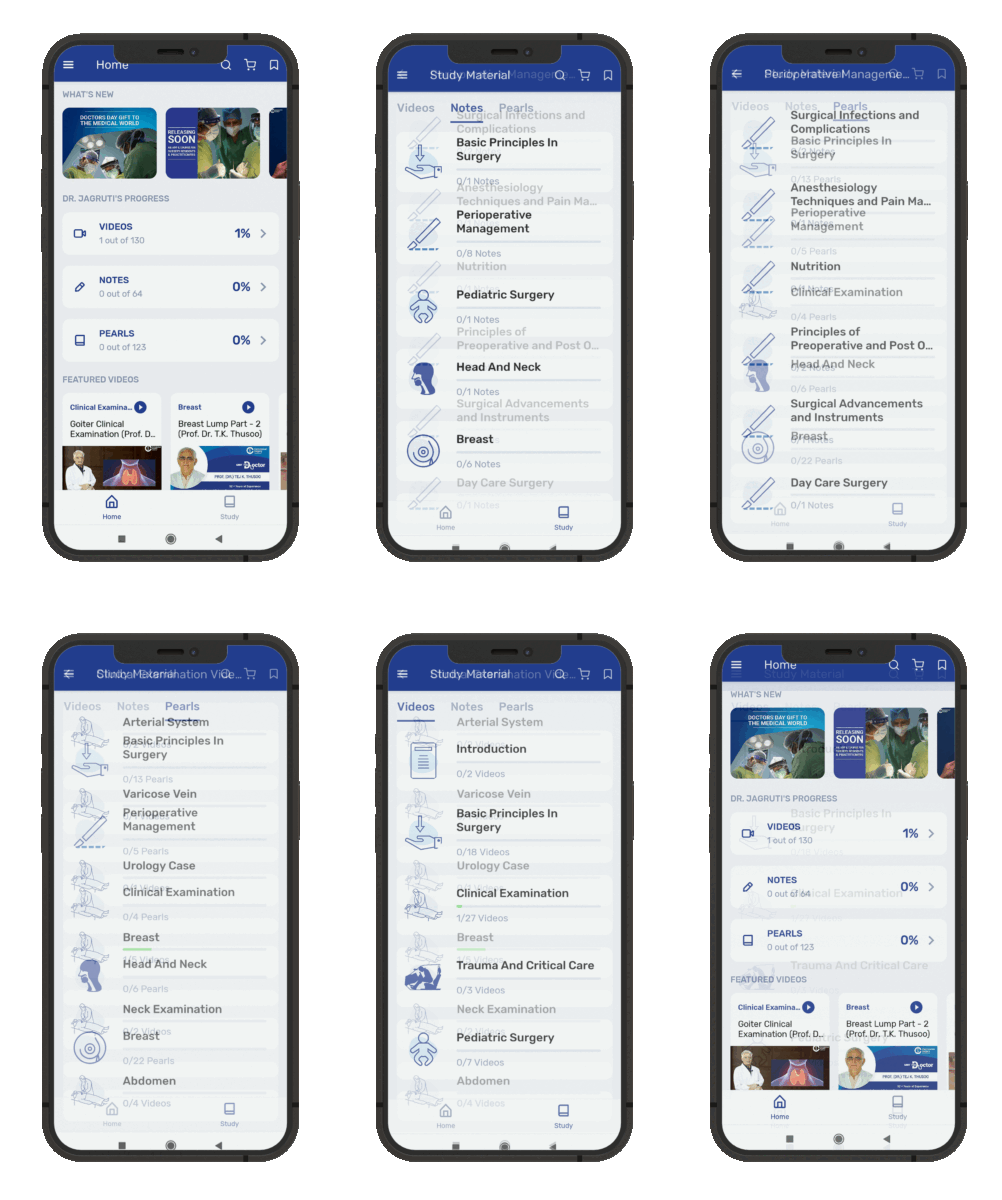
Subscribers gain access to a wide range of structured academic resources, including session recordings, OSCE-focused discussions, solved previous year questions, revision material, MCQ practice modules, and clinically relevant case discussions.
These resources are curated to support continuous learning and consistent progress throughout residency.
Consistency, Clinical Reasoning & Surgical Excellence
Success in surgery is built through continuous learning, disciplined revision, and the ability to translate concepts into clinical decision-making.
This month’s academic discussions—from trauma and thoracic surgery to neurosurgical fundamentals—reflect the ongoing commitment to helping residents strengthen both their examination preparation and clinical confidence.
Every session, discussion, and learning resource is designed with a single goal: supporting residents in becoming more confident, competent, and clinically prepared surgeons.
Continue learning. Continue questioning. Continue growing.